
The same skills on a real robot
Our plan
What is done, and what comes next.
Three parts of Tonian move in parallel: the robots’ skills, the hardware and the planner. Here is what each has done, and where they meet next. Everything with a robot in it runs in simulation for now.
The plan
Three branches, four stages.
Each branch has its part to build in each stage, and they meet at the milestones. We are in the first stage.
01 · We are hereSimulationThe planner, and the robots’ skills in physics simulation.02 · NextFirst hardwareThe same plans and skills on a real robot, at a framing table.03 · ThenPilotTimber-frame walls on a real job, with a builder.04 · LaterNetworkMany kinds of robot, one model of the site.
Robot skillsHow the humanoid learns to move and to work
Robot skills
Walking, moving like a person and swapping tools, learned in simulation
Robot skills
Robot skills
Framing walls on a real job, with no markers on site
Robot skills
Skills for more trades
HardwareThe humanoid and its tools
Hardware
A tool family for the humanoid, drawn to be built
Hardware
The Tonian H2 and its tools, built
Hardware
Humanoids with their tools, on site
Hardware
Robots of other kinds and makers, joined in
PlannerThe site, the plan and its tasks
Planner
From a scan of the site to a plan, and tasks for each robot
Planner
A live link to the robots
Planner
Scan, build, scan again
Planner
One plan for every trade and every robot on the site
Milestones
Timeline
The road, step by step.
Scroll to move through time. The branches light up as you pass them, and the step on the line opens beside them.
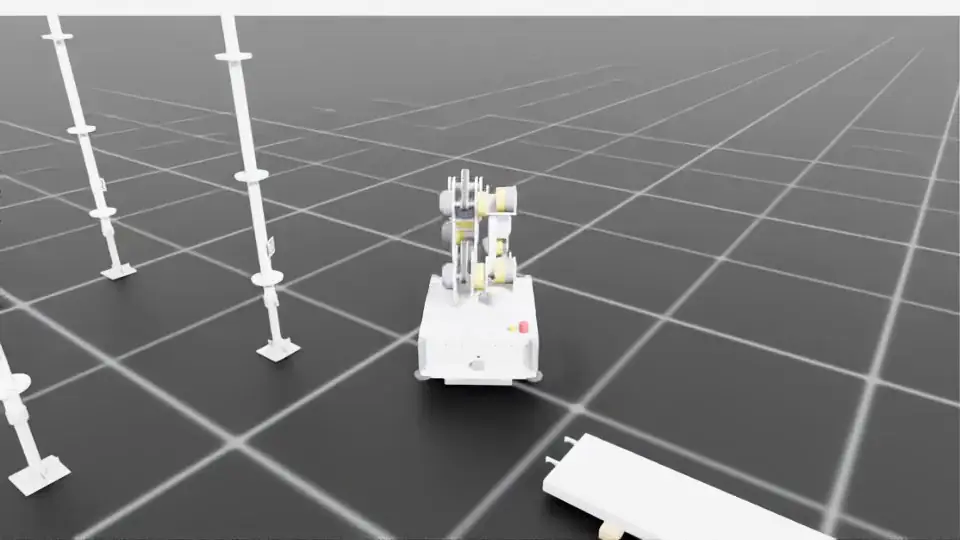 Isaac Sim · physics simulation
In simulation we start with scaffolding, because it is easy to train on: a few standard parts, strict rules for where each one goes, and every placement can be checked. Our first planner drew a scaffold round a house; from one command, a scaffold robot in physics simulation set each part of a bay, checked it and locked it.
Which part goes up next is chosen by a policy trained with reinforcement learning. It also finishes scaffold plans it has never seen.
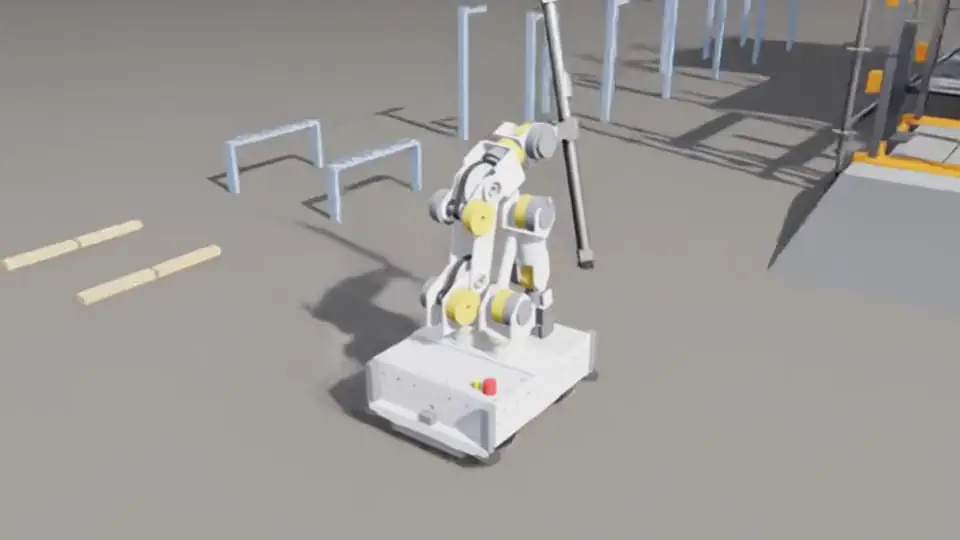 Isaac Sim · physics simulation
The upper level of a ring of scaffold round a shed, built in one overnight run in physics, two robots working together on parts of it. Every part placed and locked.
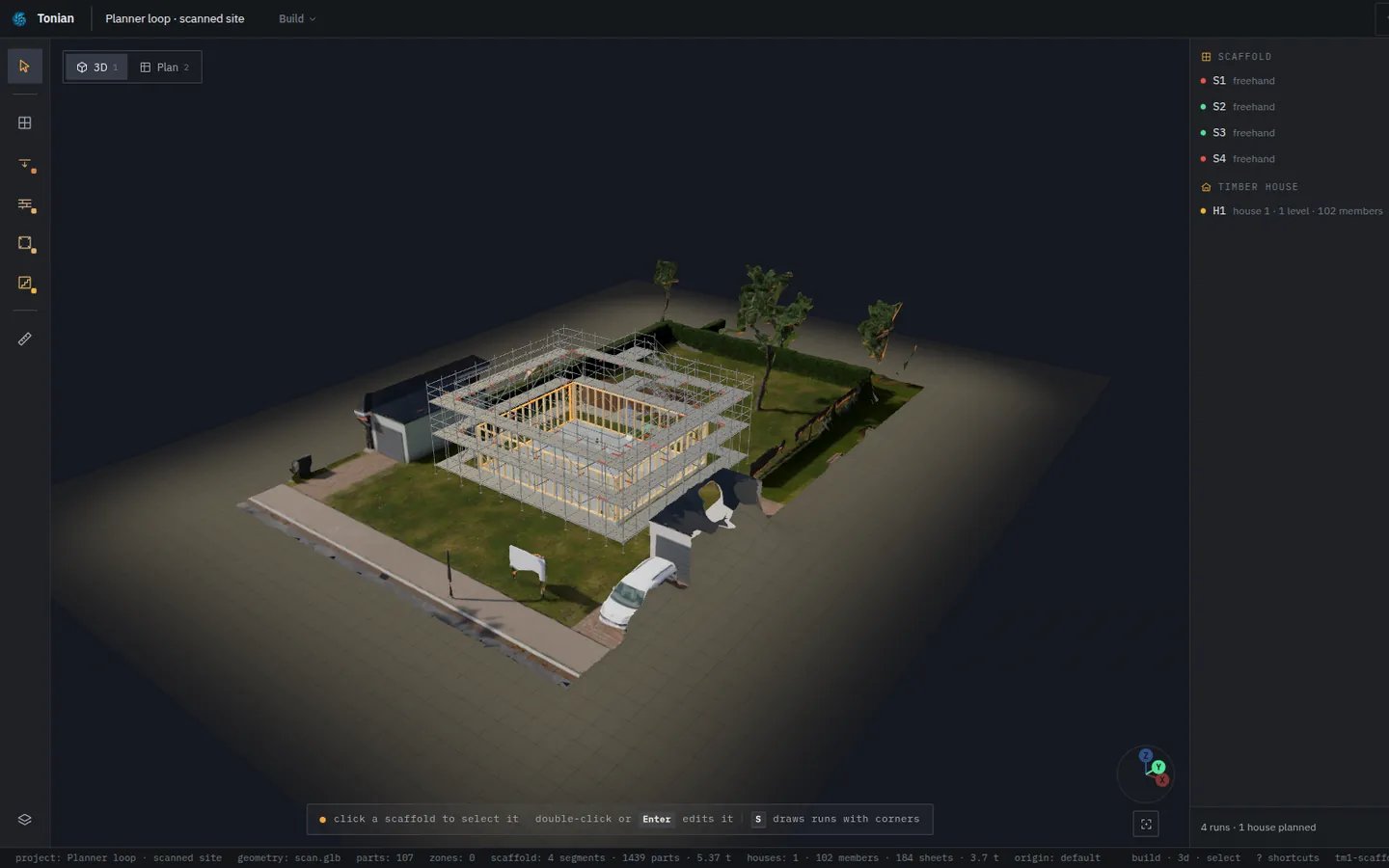 Tonian dashboard · screen capture
The planner we work in now. A drone scan becomes a model of the site, and what is to be built is planned on it and checked against it.
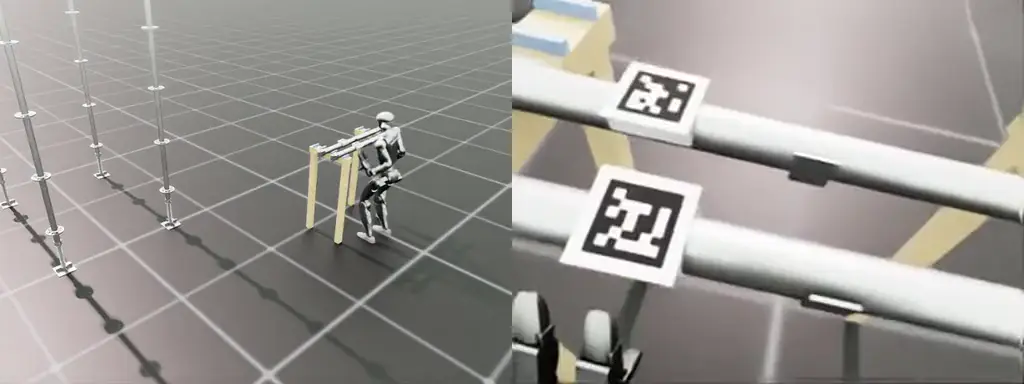 Isaac Lab · the G1 and its head camera
We fine-tuned NVIDIA’s GR00T N1.7, a vision-language-action model, to set scaffold ledgers with a Unitree G1, and trained a smaller ACT policy on the same data. ACT did better: it drives the arms and hands from the robot’s cameras.
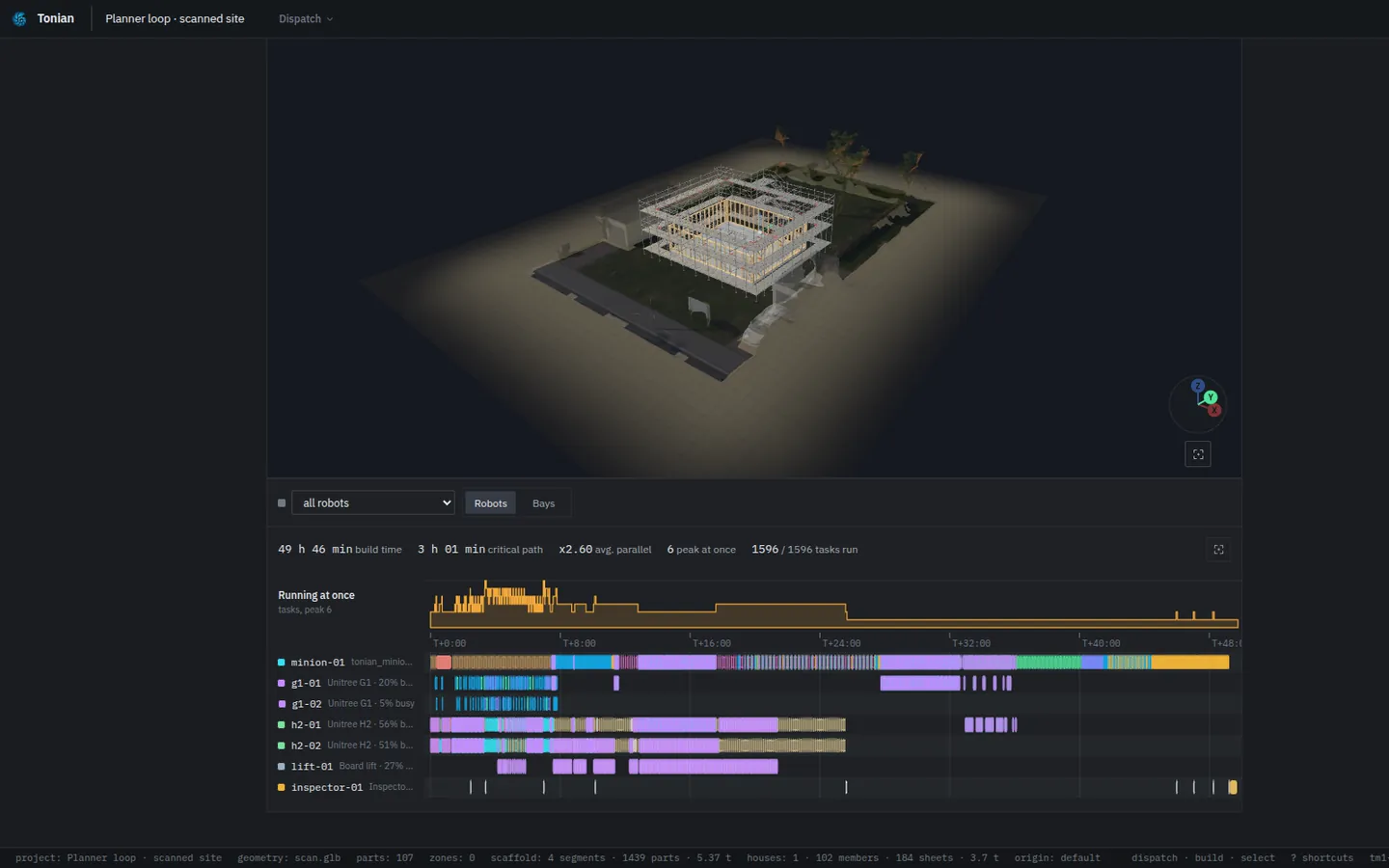 Tonian dashboard · screen capture
Dispatch turns the plan into tasks, gives each to a robot that can do it, and simulates the build as a schedule before anything is set up on site.
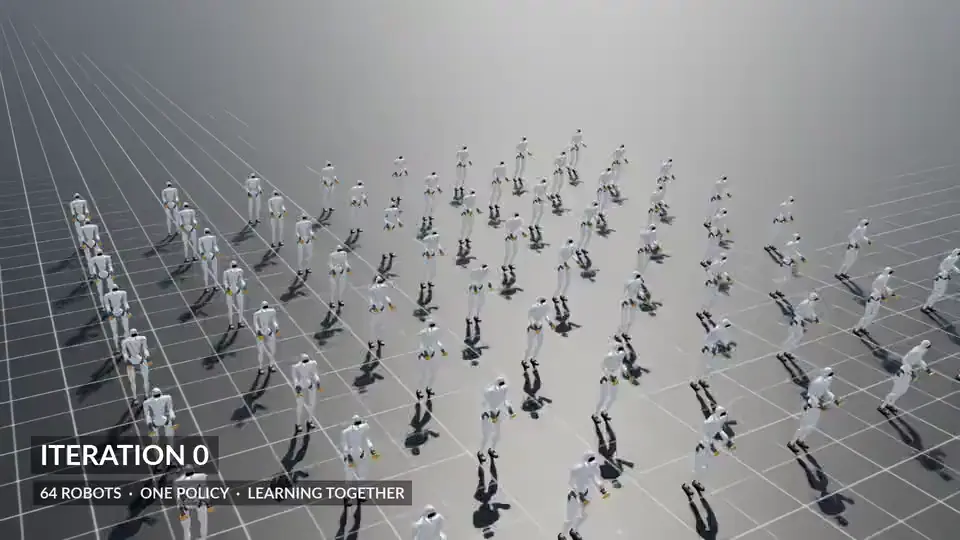 Isaac Lab · physics simulation
The H2 learns to walk on many copies of itself at once, with one policy, while a second network trained on human walking judges its style. By the end it walks with a human stride and timing.
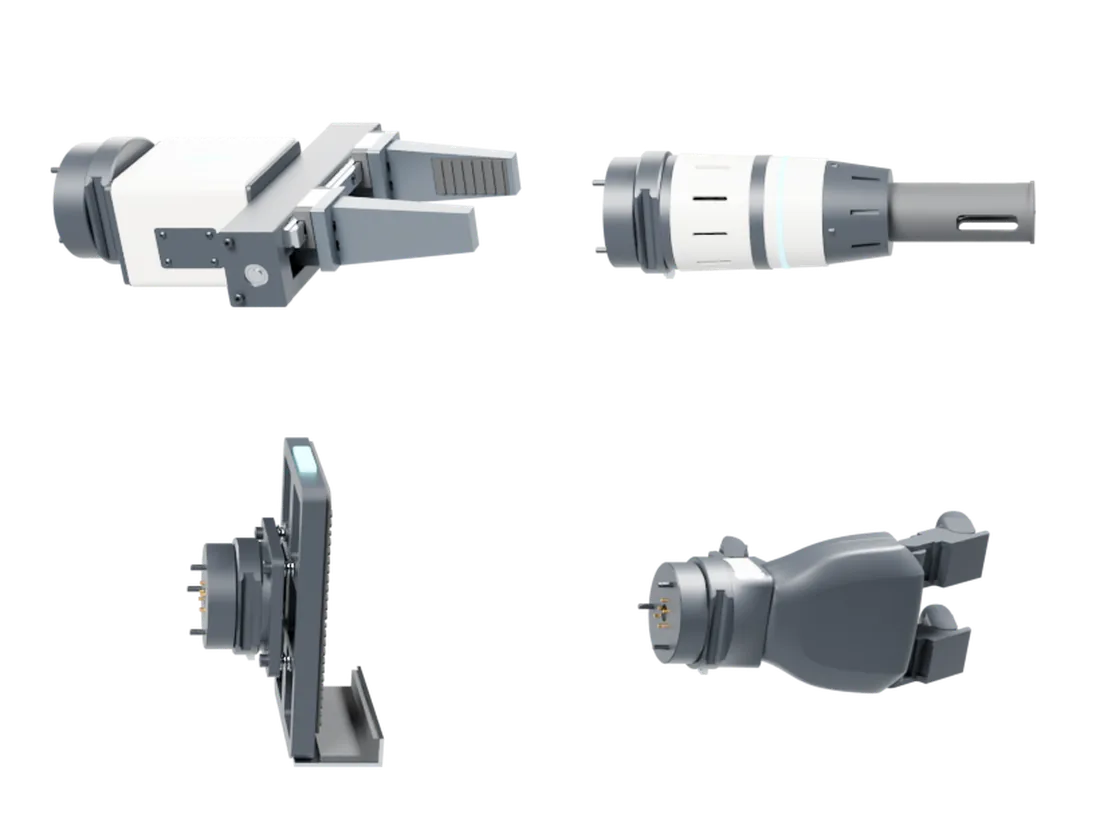 Rendered from CAD
The H2 changes hands at a station: a gripper, a drill, a panel hand and a three-finger hand, each on a quick-change coupling. Drawn to be built.
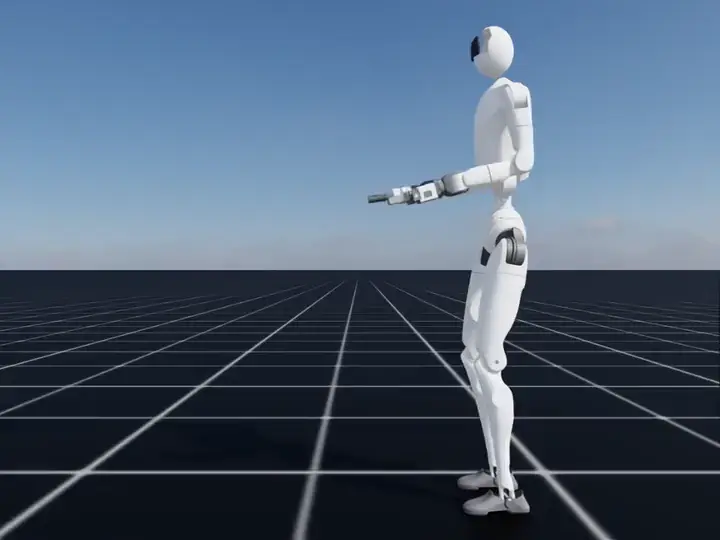 Isaac Lab · physics simulation
The walker, retrained with the tools in its hands: it stands still, sets off and stops when told to.
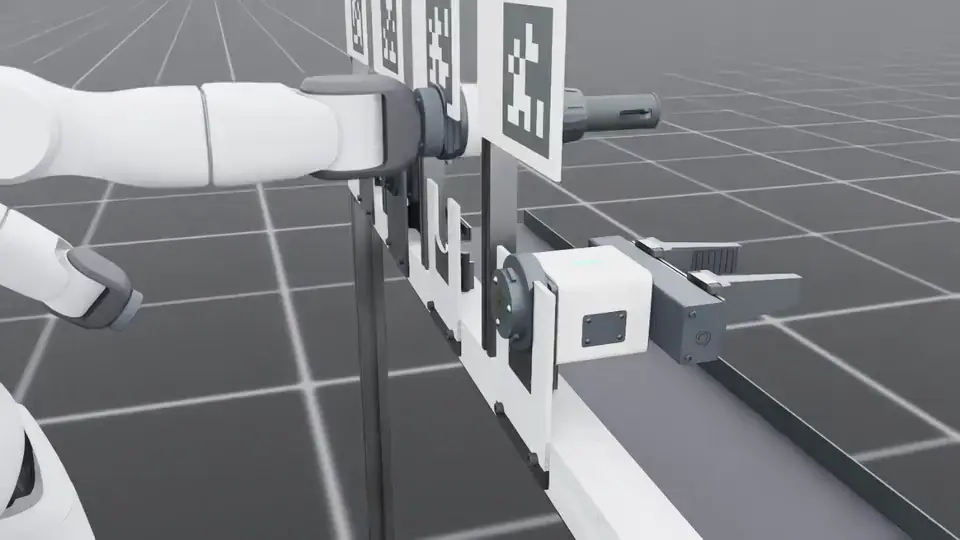 Isaac Lab · physics simulation
Park the drill, pick up the gripper: the arm makes the swap while the walker keeps the robot balanced.
- Now · 1 Nov 2026
Walking to the station, swapping and walking on, as one run.
One policy for walking and working, so the robot walks to a job and works there. Then the first whole task from the dashboard, in simulation.
The H2 with our head shell and its tool family, in simulation first.
The changer, the gripper and the drill made as drawn, and tested on the bench before they go on a robot.
Dispatch sends its tasks to robots that are running, and what they report comes back into the plan.
The same plans and the same skills on a real robot at a framing table. The first real-robot data, and the first measure of how much of the simulation carries over.
The drone scans the site again while it is being built. What is in is checked against the plan, and the next tasks go out from what is really there.
Timber-frame walls on a real job, with a builder who brings the trade. We bring the planner and the robots, and learn the job with them.
More of the building, from more trades, built from one plan by robots of any kind that tell each other what they are doing and take the next task that fits.
Dates are the day the work landed in our repositories. Steps after “now” have no date yet.